There’s a lot more to gutters than most homeowners realize.
If you’re building new or replacing old gutters, choosing the wrong type can lead to leaks, water damage, and overflow. In this guide, I walk you through every major gutter option by style, size, and installation type, so you can confidently choose the right system for your home.
At William Penn Roofing & Exteriors, we’ve helped hundreds of homeowners like you protect their homes with durable roofing services and gutter installation.
Need a professional evaluation? Get a free estimate from our licensed roofing contractors today.
The 5 Most Common Gutter Styles
There are four primary gutter styles used on residential and commercial properties today:
K-Style Gutters
K-style gutters are the most common option for modern homes. They have a flat back and a decorative, curved front that sometimes resembles crown molding.
Benefits of K-style gutters:
- Very high water capacity
- Strong and durable
- Clean, modern appearance
- Great fit for most residential homes
Half-Round Gutters
Half-round gutters have a classic U-shaped design, and are often used on historic homes where appearance matters just as much as function.
Benefits of half-round gutters:
- Timeless, traditional look
- Smooth interior which helps with water flow
However, they do have a lower water capacity, and they may require external brackets for support.
Box Gutters
Box gutters are built directly into the roof structure rather than hanging off the edge.
Benefits of box gutters:
- Designed to handle very large volumes of water
- Great for commercial buildings, very large roof surfaces, and new construction
They must be installed during construction, and aren’t typically used for residential retrofitting projects.
Fascia Gutters
Fascia gutters are custom-formed to act as both fascia and gutters.
Benefits of fascia gutters:
- Seamless appearance
- Highly Leak-resistant
- Sleek, modern look
However, they may have a higher cost, and should be installed by a professional.
European Style Gutters
European style gutters are very similar to half-round gutters, but they feature a decorative external bead. They’re very popular for high-end and custom-built homes.
Benefits of European style gutters:
- Great water flow
- Visual appeal
Sectional vs. Seamless Gutters: Which Is More Reliable?
- Sectional Gutters: Installed in pieces and joined together. They’re easier for DIY projects, but are more prone to leaks.
- Seamless Gutters: Custom-formed on site. They have fewer leak points and a much cleaner appearance, but require professional installation. Most homeowners choose seamless gutters for long-term reliability.
Gutter Materials You Can Choose From
The material you choose determines the cost, maintenance, and lifespan of your gutters.
Vinyl
- Affordable and budget-friendly
- Very easy to install
- DIY-friendly
- Significantly shorter lifespan
- Can crack in extreme temperatures
Aluminum
- By far the most popular gutter material
- Rust-resistant
- Lightweight
- Mid-range cost
- Works in most climates
Copper
- Premium option
- Extremely long-lasting
- Develop a beautiful patina over time
- High-end appearance
- Higher upfront cost
Zinc
- Extremely durable
- Often used on custom-built and older homes
- Very long lifespan
- Strong and corrosion-resistant
- Requires professional installation
Steel
- The strongest gutter material
- Can be made of galvanized steel, stainless steel, or galvalume
- Heavy-duty
- Requires maintenance to prevent corrosion
Gutter Sizes & Downspout Dimensions
Most residential homes use a 5-inch gutter, but 6-inch gutters are becoming more common.
You may need a 6-inch or larger gutter if you have:
- A very steep roof
- A large roof surface
- Heavy rainfall in your area
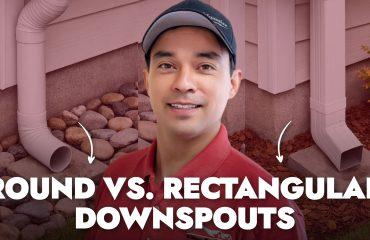
Downspouts also vary in shape and size, including rectangular and round downspouts. Choosing the right size can help you prevent overflow and clogs.
Accessories To Extend Your System’s Lifespan
The following accessories can improve performance and save you time on maintenance for your gutters:
- Gutter guards
- Leaf strainers
- Downspout brackets
- Rain chains
- Conductor heads
- Gutter cleaning tools
These add-ons can extend the lifespan of your gutter system.
Should You Install Your Own Gutters or Call A Professional?
Some gutter systems are DIY-friendly, while others need professional installation. If you’d like to install them yourself, you may want to consider vinyl gutters or some type of aluminum sectional system.
In general, I’d recommend a professional installation, especially for:
- Seamless gutters
- Copper and zinc systems
- Box gutters
- Fascia
Improper installation can lead to leaks, sagging, and drainage issues.
So, Which Option Is Best for Your Home?
When choosing gutters, consider:
- Your home’s architectural style
- Your budget
- Your local rainfall and climate
- Local building homes
- The level of maintenance you’re comfortable with
The best gutter system is the one that fits your home, not just the cheapest option.
Protect Your Home with Gutter Services from William Penn Roofing & Exteriors
Don’t leave water damage up to chance. Whether you need an upgrade to 6-inch seamless gutters or a classic half-round installation, William Penn Roofing & Exteriors will recommend the best system to protect your home.
Keep your home safe and dry. Contact us today to schedule a free quote.