Ridge vent or attic fan?
If your attic isn’t vented the right way, you could potentially be paying for it with higher energy bills.
In this article, I’m going to walk you in through the differences between a ridge vent and an attic fan so you can make the right call for your home.
At William Penn Roofing & Exteriors, I’ve helped hundreds of homeowners like you protect their homes with the right roofing services and attic ventilation.
Not sure which type of attic ventilation is best for your home? When you schedule your free estimate, our roofing contractors will inspect your attic and recommend the right solution.
Want more tips for keeping your roof in top shape? Check out my roofing 101 video playlist.
What Is a Ridge Vent?
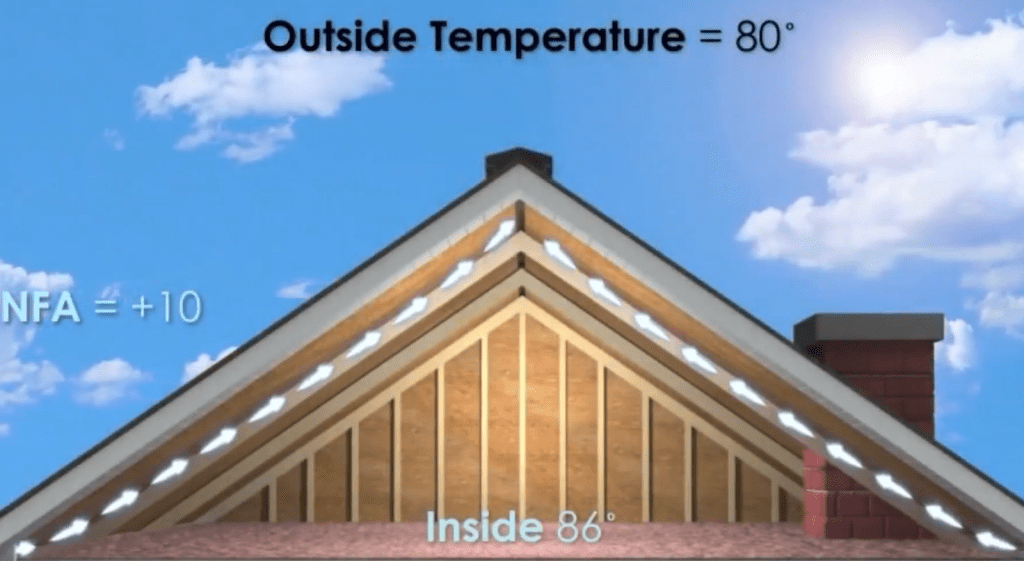
A ridge vent runs across the very peak, or the very top, of your roof, right along the ridge line. It allows warm air to naturally vent out of your attic.
It does not use electricity, and works with the airflow from soffit vents, which are located along the eaves of your roof.
This system creates passive airflow:
- Cool air is pulled in through the soffit vents
- Warm air rises and exits through the ridge vent
Many homeowners love ridge vents because:
- They are low maintenance
- They are energy efficient
- They are virtually invisible from the street
The Catch With Ridge Vents
There is a catch with ridge vents. They only work well if your soffit vents are
- Properly installed
- Free from debris or insulation blockage
In more humid climates, ridge vents may not be enough on their own to remove trapped moisture and heat.
What Is an Attic Fan?
Attic fans are a different type of ventilation system. These are mechanical devices designed to actively pull hot, stale air out of your attic.
They can be either:
- Electric-powered
- Solar-powered
Attic fans are a great option if:
- Your attic tends to trap moisture
- You have limited ventilation
- You live in a humid area
Downsides of Attic Fans
Unlike ridge vents:
- Most attic fans use power
- They are not as energy efficient
If installed incorrectly, attic fans can:
- Pull cool air out of your living space
- Raise your utility bills instead of lowering them
Ridge Vent vs. Attic Fan: Major Differences
Ridge vents and attic fans have a few key differences:
Energy Efficiency
- Ridge vents are more energy efficient, as they run passively and don’t use any power.
- Attic fans use power, leading to higher operating costs over time
Climate Considerations
- In drier climates, ridge vents are usually more than enough
- In hot, humid regions, attic fans may give you better results
Installation Requirements
- Ridge vents are simple, but they need proper soffits
- Attic fans require electrical wiring or solar panel installation
Costs and Maintenance Needs
- Attic fans: more expensive upfront and over time
- Ridge vents: fewer moving parts, lower maintenance, lower long-term cost
Which Attic Ventilation Option Is Best for You?
- If you live in a humid climate and your attic traps heat, an attic fan might be the better choice
- If your home already has soffit vents and good attic airflow, a ridge vent can be a clean, efficient solution
- If you want to maximize ventilation, some homes benefit from using both systems, as long as they are properly balanced
Find The Right Ventilation Solution with William Penn Roofing & Exteriors
Still not sure which option makes sense for your roof?
When you contact William Penn Roofing & Exteriors, we’ll:
- Inspect your attic
- Walk on your roof
- Explain the best ventilation options for your home
Get your free estimate today to protect your home and lower your energy costs.